Test first
Because radon cannot be seen or smelled, measurement is the only way to know the level in a home.
Radon is invisible and odorless, so a reliable test is the starting point. When results are elevated, Healthy Home Solutions designs a mitigation approach around the home’s foundation, airflow, layout and installation needs.
Because radon cannot be seen or smelled, measurement is the only way to know the level in a home.
Basements, slabs and crawl spaces require different system considerations and pressure strategies.
A follow-up test confirms how the completed system is performing under real home conditions.
Delaware homes include varied soil conditions, coastal construction, crawl spaces, slabs and basements. The system layout should reflect how radon is entering and how the home is built.
We begin with the radon result and relevant testing conditions.
Foundation type, potential suction points, electrical access and exterior routing are considered.
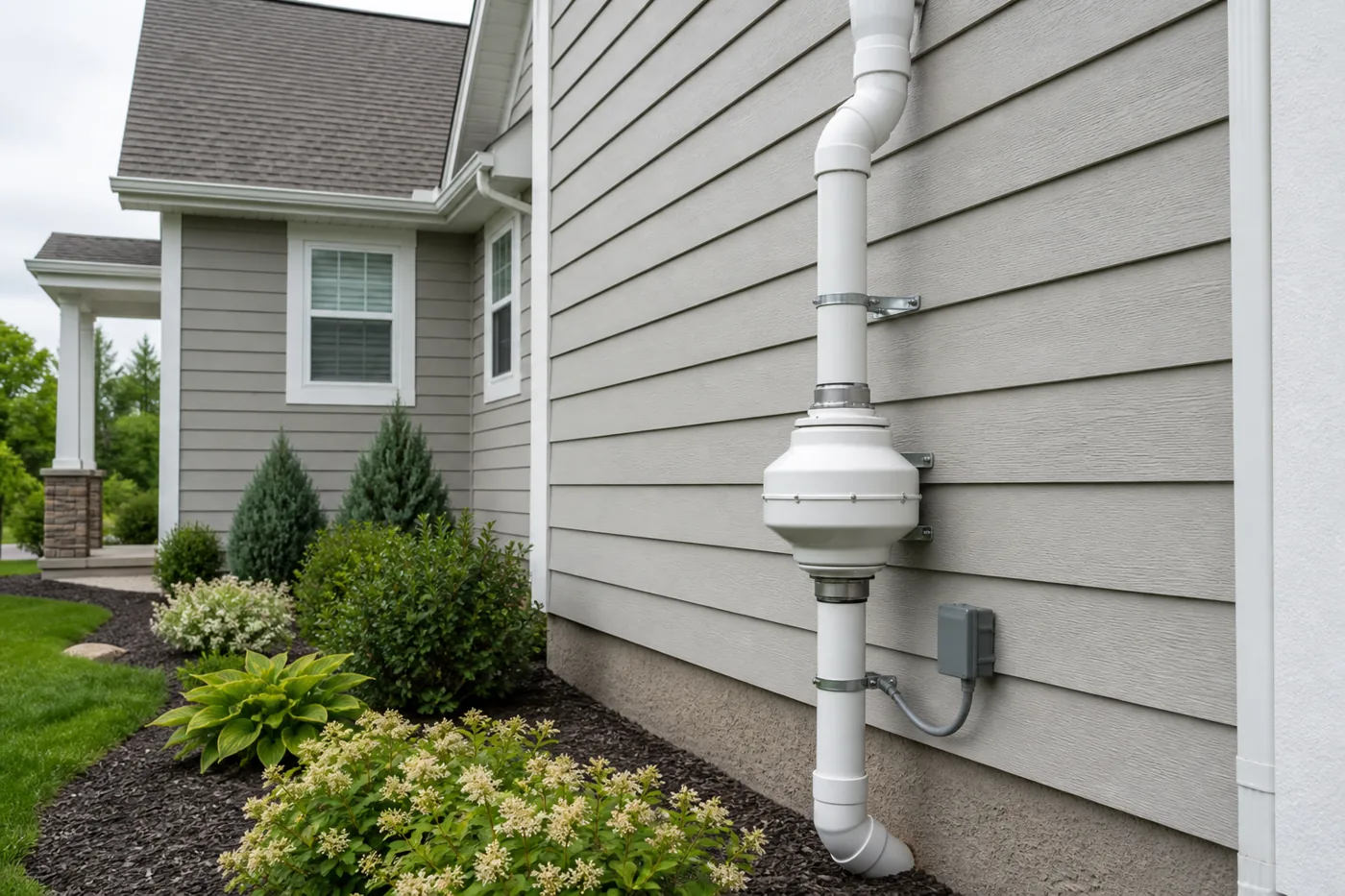
The fan, piping and monitoring components are placed for effective operation and a clean appearance.
Post-install testing verifies the result and provides a new baseline for the homeowner.
The EPA recommends taking action at 4 picocuries per liter or higher and considering action between 2 and 4. A qualified professional can explain the test result and options.
Some piping and the exterior fan may be visible. Routing is planned to balance effective operation, code requirements, service access and appearance.
A post-install radon test is the essential verification step. The system monitor shows pressure operation, but it does not measure the radon level.
Healthy Home Solutions serves homeowners throughout Delaware and the Maryland Eastern Shore from its Felton location.
Share your test result and a few details about the home to start the planning process.
Request Radon Mitigation